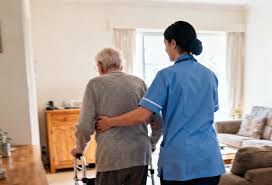
For patients recovering from a hip fracture, going home is often the goal — and the greatest risk. Falls, readmissions, and unmet safety needs are common in the first few weeks after discharge. For home health agencies providing occupational and physical therapy in the home, new research reinforces what clinicians see every day: care delivered in the home leads to better follow-through and better outcomes.
A recent study, “Home visits by occupational therapists improve adherence to recommendations,” offers strong evidence supporting the effectiveness of home-based therapy during the transition from hospital to home.
The Challenge With Hospital Based Assessments
Hospital discharge planning typically includes therapy assessments and recommendations for equipment, task modifications, and home safety. While essential, these recommendations are often made without seeing the patient’s actual living environment.
As a result:
-
Safety risks can be missed
-
Equipment may not fit the space
-
Patients may feel overwhelmed or unsure how to implement recommendations
-
Follow-through can be inconsistent
This gap is exactly where home health OT and PT services make a difference.
What the Research Shows
In a randomized controlled trial of adults recovering from hip fracture, researchers compared:
-
Usual care (hospital-based OT assessment)
-
Usual care plus one pre-discharge OT home visit
All participants received inpatient rehabilitation, but the group that received a home visit experienced meaningful advantages.
1. More Relevant, Actionable Recommendations
Patients seen in their homes received significantly more therapy recommendations, nearly three additional recommendations per person. Being in the home allowed therapists to identify real-world challenges related to mobility, transfers, bathroom access, and daily routines.
For home health agencies, this reflects the core strength of in-home care: therapy tailored to the environment where recovery actually happens.
2. Higher Adherence to Therapy Recommendations
Patients who received home-based OT were more likely to follow recommendations related to:
-
Assistive devices
-
Task and activity modifications
This matters because adherence is often the missing link between a good plan and a good outcome. When PTs and OTs deliver care in the home, recommendations feel practical, achievable, and immediately relevant.
3. Reduced Hospital Readmissions
One of the most important findings for home health agencies:
Adherence to therapy recommendations helped reduce hospital readmissions within the first 30 days.
The study showed that improved adherence mediated the relationship between home visits and fewer readmissions — reinforcing the role home-based therapy plays in value-based care and risk reduction.
Why Home-Based PT and OT Work
Home health therapy supports recovery in ways hospital-based care cannot:
-
Therapists see actual barriers, not simulated ones
-
Interventions are collaborative and patient-centered
-
Education happens in real time, using the patient’s own space and equipment
-
Confidence and independence improve faster
For PTs, this means safer mobility, transfers, and gait training.
For OTs, it means meaningful self-care, task adaptation, and environmental safety — all where they matter most.
What This Means for Home Health Agencies
This research validates the critical role of home health PT and OT in post-acute recovery, especially for high-risk populations like patients recovering from hip fracture.
Home health agencies are uniquely positioned to:
-
Improve adherence to therapy recommendations
-
Reduce avoidable readmissions
-
Support safer aging in place
-
Deliver measurable value to referral partners and payers
Bottom Line
Therapy in the home isn’t just more convenient, it’s more effective. By delivering PT and OT where patients live, home health agencies help turn recommendations into action, reduce hospital readmissions, and support safer, more successful recoveries.
Source: Lockwood KJ, Harding KE, Boyd JN, Taylor NF. Home visits by occupational therapists improve adherence to recommendations: Process evaluation of a randomised controlled trial. Aust Occup Ther J. 2020 Aug;67(4):287-296. doi: 10.1111/1440-1630.12651. Epub 2020 Mar 5. PMID: 32133668.