When an older adult begins struggling to open a jar, carry groceries, rise from a chair, or keep up with a normal walking routine, it can be tempting to say, “They’re just getting older.”
But a gradual loss of muscle strength should not automatically be dismissed as an unavoidable part of aging.
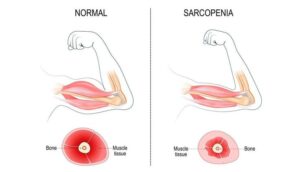
One condition receiving increasing attention in rehabilitation and geriatric care is sarcopenia, a condition involving progressive loss of skeletal muscle strength and function. Current rehabilitation guidance and 2026 research continue to emphasize assessment, resistance exercise, and individualized rehabilitation as important parts of addressing age-related muscle decline.
For seniors, recognizing changes early can create an opportunity to address physical decline before everyday activities become significantly more difficult.
What Is Sarcopenia?
Sarcopenia refers to the progressive loss of muscle strength and, depending on the diagnostic framework, muscle quantity and physical performance.
It is different from simply noticing that someone is less active than they were years ago.
Muscle naturally changes with age, but inactivity, illness, hospitalization, inadequate nutrition, chronic health conditions, and other factors can contribute to greater loss of strength and physical function.
Research and current clinical guidance increasingly emphasize that frailty and muscle loss can be addressed rather than simply accepted as an inevitable consequence of aging.
Early Signs of Muscle Loss May Be Easy to Miss
Sarcopenia does not necessarily appear suddenly.
Instead, family members may notice small changes over several months.
An older adult may:
- Have difficulty standing up without using their arms
- Carry lighter grocery bags than they used to
- Walk more slowly
- Avoid activities that require physical effort
- Have difficulty lifting objects
- Become tired during activities that were previously manageable
- Struggle with household chores
- Need more assistance with daily activities
- Have difficulty getting up from the floor
- Notice that their overall physical abilities have declined
None of these signs alone proves that someone has sarcopenia. However, a noticeable decline in strength or function deserves attention.
Why Muscle Strength Matters for Independence
Muscle strength affects much more than exercise performance.
It plays a role in the everyday movements seniors perform repeatedly.
Standing from a chair requires lower-body strength. Carrying laundry requires upper- and lower-body strength. Walking requires coordinated muscle activity throughout the body.
Even maintaining an upright posture for an extended period requires muscular endurance.
When strength declines, ordinary tasks can require more effort.
That can lead a person to do less.
And when activity decreases further, physical capacity can decline even more.
This is one reason rehabilitation professionals increasingly emphasize prevention and early intervention rather than waiting until significant functional loss has occurred.
How Physical Therapy Can Help
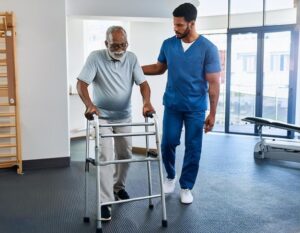
Physical Therapy can evaluate how an older adult’s strength and physical performance are affecting everyday function.
A therapist may assess:
- Lower-body strength
- Upper-body strength
- Walking ability
- Functional movements
- Endurance
- Sit-to-stand performance
- Physical activity levels
- Mobility limitations
- Ability to complete everyday tasks
Based on the findings, the therapist can develop an individualized rehabilitation program.
Treatment may include progressive strengthening, functional exercises, walking activities, mobility work, and other forms of physical activity appropriate for the person’s condition.
The important point is that rehabilitation should be individualized.
A senior who has been inactive for several months may need a very different starting point from someone who has remained physically active.
Why Resistance Training Matters
One of the major themes in current sarcopenia research and rehabilitation guidance is resistance exercise.
Resistance training challenges muscles to work against an external load. Depending on the individual’s abilities, this might involve resistance bands, weights, machines, body weight, or other forms of resistance.
The appropriate amount of resistance depends on the person.
For an older adult with significant weakness, therapy may begin with very basic functional movements. As strength improves, the therapist can gradually adjust the challenge.
The goal is not to turn every senior into a weightlifter.
The goal is to build enough strength to support meaningful activities.
Functional Strength Is Just as Important
A senior may become stronger in an exercise but still struggle with daily activities if therapy does not connect that strength to real-world movement.
This is why functional rehabilitation matters.
A Physical Therapist might use movements that resemble everyday tasks, such as:
- Standing from different chair heights
- Carrying an appropriately weighted object
- Stepping in different directions
- Walking for progressively longer periods
- Reaching while standing
- Moving between sitting and standing
- Practicing controlled movements during daily activities
The exact exercises should depend on the individual’s needs and medical considerations.
Sarcopenia and Frailty Are Related, But Not Identical
Sarcopenia and frailty are sometimes used interchangeably, but they are not exactly the same thing.
Sarcopenia centers on muscle health and physical function. Frailty is broader and involves reduced physiological reserve across multiple systems, making an older adult more vulnerable to stressors such as illness or injury.
Current geriatric rehabilitation literature increasingly considers these issues together because muscle weakness and reduced physical performance can contribute to broader functional vulnerability.
This is another reason a comprehensive assessment can be more useful than focusing on one symptom alone.
Nutrition Can Be Part of the Conversation
Muscle health is influenced by more than exercise.
Adequate nutrition is also important, particularly for older adults who have experienced unintentional weight loss, poor appetite, or other nutritional concerns.
Recent guidance on frailty and sarcopenia emphasizes the importance of appropriate nutritional status alongside physical activity.
Physical Therapists do not replace dietitians or physicians. If an older adult has unexplained weight loss, poor appetite, difficulty eating, or concerns about protein or calorie intake, those issues should be discussed with an appropriate healthcare professional.
A coordinated approach can address the different factors affecting muscle health.
Why Early Intervention Matters
Waiting until an older adult can no longer perform a familiar activity may mean that significant strength and function have already been lost.
Instead, families can pay attention to smaller changes.
Is Mom taking longer to get out of a chair?
Is Dad avoiding carrying groceries?
Has a previously active older adult stopped taking walks?
Are household activities becoming noticeably harder?
These changes do not automatically indicate sarcopenia, but they can be reasons to discuss physical function with a healthcare professional.
Early assessment can help identify whether rehabilitation may be appropriate.
In-Home Physical Therapy for Seniors in NYC
For some older adults, getting to a therapy clinic can be challenging.
Pain, limited mobility, transportation difficulties, or low endurance can make traveling to appointments physically demanding.
In-home Physical Therapy offers another option for seniors who have difficulty traveling.
At Rehab On Wheels, therapy can take place in the environment where the senior actually lives and performs daily activities.
This allows treatment to focus on practical goals, such as improving the strength needed to move around the home, stand from a chair, carry everyday objects, or participate more comfortably in normal routines.
Rehab On Wheels provides Physical and Occupational Therapy services in Brooklyn and Staten Island, along with in-home rehabilitation throughout New York City.
Supporting Strength at Every Age
Muscle loss should not be viewed as a reason for an older adult to stop being active.
With appropriate medical guidance and an individualized rehabilitation program, many seniors can continue working on strength and physical function.
The starting point may be modest.
One person may need to begin with supported movements. Another may be ready for resistance exercises. Someone else may need to focus first on improving their ability to perform everyday activities safely.
The program should meet the person where they are.
Conclusion
Sarcopenia is becoming an increasingly important topic in senior health and rehabilitation because muscle strength is closely connected to physical function and independence.
Recognizing changes early can help families move the conversation away from simply saying, “That’s what happens when you get older.”
Instead, changes in strength and function can become a reason to ask better questions.
Could rehabilitation help?
Would a strength assessment be useful?
Are there ways to make everyday activities easier?
For seniors in New York City, personalized Physical Therapy can provide an opportunity to evaluate physical function and develop a plan based on individual needs and goals.
At Rehab On Wheels, the focus is not simply on exercise. It is on helping older adults maintain the physical abilities they need for the lives they want to continue living.
Rehab On Wheels
174 Bay 29th St. Suite #C1
Brooklyn, NY 11214
Phone: 718-395-7445
Fax: 718-889-6707
Office Hours: Monday-Friday, 9 AM-5 PM
Therapy Hours: Monday-Sunday, 8 AM-8 PM
Author: Catherine Morrissey, PT, DPT