

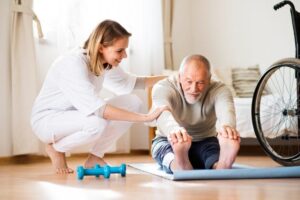
When an older loved one begins Physical or Occupational Therapy, the therapist is only one part of the rehabilitation journey.
For many seniors, family members are there between therapy sessions. They may help with transportation, meals, household activities, appointments, exercise routines, or simply encourage when progress feels slow.
That makes family caregivers an important part of the rehabilitation environment.
Recent rehabilitation research is paying greater attention to how therapists and family or care partners can work together, including the importance of communication, clear roles, and realistic expectations.
For families in New York City, this collaborative approach can be especially valuable when an older adult is receiving in-home Physical Therapy.
Rehabilitation Does Not End When the Therapist Leaves
A therapy session may last a limited amount of time, but a senior’s daily routine continues throughout the day.
Walking to the kitchen.
Getting dressed.
Standing from a chair.
Preparing a meal.
Moving from the bedroom to the bathroom.
These everyday activities provide opportunities for an older adult to practice safe movement and apply strategies learned during therapy.
Family caregivers can support this process without becoming the therapist themselves.
Their role is often about encouragement, consistency, communication, and creating an environment where the senior can safely participate.
The Goal Is Support, Not Doing Everything for Them
One of the most common challenges families face is knowing how much help to provide.
When a loved one is struggling, the natural reaction is often to step in and do the task for them.
Sometimes that assistance is necessary.
But when a senior can safely perform part of an activity independently, allowing them to participate can help maintain their confidence and functional abilities.
For example, instead of automatically dressing a loved one, a caregiver may allow the person to complete the parts of dressing they can manage safely.
The appropriate level of assistance should always follow the recommendations of the senior’s healthcare and rehabilitation team.
Encourage Consistency With the Therapy Plan
Physical Therapy works best when recommendations can be incorporated into everyday life.
A therapist may provide exercises or activities to complete between sessions.
Family members can help by creating a routine that makes those activities easier to remember.
This might involve:
- Setting aside a consistent time for prescribed exercises
- Keeping necessary equipment accessible
- Offering encouragement
- Helping the senior track appointments
- Sharing relevant changes with the therapist
- Supporting safe participation in daily activities
The caregiver does not need to supervise every movement.
In many cases, simply helping create consistency can be valuable.
Never Turn Home Exercises Into a Competition
Rehabilitation is not about doing the greatest number of repetitions or progressing as quickly as possible.
Older adults recover and adapt at different rates.
A senior recovering from illness may have very different capabilities from someone who has been physically active throughout their life.
If an exercise causes unusual pain, dizziness, significant shortness of breath, or another concerning symptom, the activity should not simply be pushed through. The caregiver should follow the therapist’s instructions and communicate concerns to the appropriate healthcare professional.
The goal is safe, individualized progress.
Ask the Therapist Questions
Family caregivers sometimes hesitate to ask questions because they do not want to interrupt the therapy session.
But communication can be extremely useful.
Caregivers may want to understand:
- What is the main goal of therapy?
- Which activities should be practiced between visits?
- What should the senior avoid?
- How much assistance should be provided?
- What changes should be reported?
- What signs indicate that the therapist should be contacted?
- How can everyday activities support rehabilitation?
Clear communication can help everyone understand their role.
Recent research on family and care-partner involvement in rehabilitation highlights structured communication and clearer role definitions as areas that can strengthen collaboration.
Pay Attention to Changes Between Therapy Visits
Family members often see an older adult more frequently than the therapist does.
That means they may notice changes that are not immediately visible during a scheduled therapy appointment.
A caregiver might notice that a senior:
- Is having more difficulty standing
- Is moving more slowly
- Has stopped participating in favorite activities
- Needs more assistance than before
- Is becoming unusually tired
- Is struggling with a daily task that was previously manageable
- Seems less confident about moving around the home
These observations can be useful information for the rehabilitation team.
Keeping the therapist informed can help the treatment plan remain connected to the senior’s real-world experience.
Make the Home a Supportive Rehabilitation Environment
For seniors receiving in-home Physical Therapy, the home itself becomes part of rehabilitation.
The therapist can observe how the senior moves through the spaces they use every day.
The kitchen.
The bedroom.
The bathroom.
The living room.
Hallways.
Entryways.
This can reveal practical challenges that may not be obvious in a traditional therapy setting.
Family members can help maintain a supportive environment by keeping frequently used pathways clear and following recommendations made by the rehabilitation team.
Occupational Therapy Can Help Families With Daily Activities
Physical Therapy is often associated with strength, walking, mobility, and physical function.
Occupational Therapy focuses heavily on helping people participate in everyday activities.
For seniors, this may involve dressing, grooming, bathing, meal preparation, household tasks, and other meaningful routines.
An Occupational Therapist may help identify ways to modify an activity or environment so the senior can participate more safely and independently.
This can be particularly helpful for families who are unsure how to assist without taking over every task.
Caregivers Need Support Too
There is another side to the rehabilitation conversation that is sometimes overlooked.
The family caregiver.
Helping an aging parent or spouse can be physically and emotionally demanding.
A caregiver may be balancing employment, children, household responsibilities, medical appointments, and the needs of an older loved one.
That is why caregiver expectations need to be realistic.
Family involvement should support rehabilitation, not turn the caregiver into a full-time therapist.
If a senior requires more assistance than the family can safely provide, caregivers should communicate with the healthcare team about appropriate resources and additional support.
Don’t Measure Progress Only by the Big Milestones
Families sometimes expect rehabilitation progress to look dramatic.
They may be waiting for the day their loved one suddenly walks normally again or completes an activity without any assistance.
But meaningful progress can be much smaller.
A senior who can now stand from a chair with less assistance has made progress.
Someone who can prepare part of a meal independently has gained functional ability.
A person who can walk a little farther before needing to rest may be improving endurance.
These small changes can matter because rehabilitation is ultimately about helping a person participate more fully in daily life.
In-Home Physical Therapy in NYC
At Rehab On Wheels, we understand that rehabilitation involves more than the therapist and the patient.
For many older adults, family members and caregivers are part of the support system that helps make therapy practical in everyday life.
Our Physical and Occupational Therapy services are personalized around each patient’s abilities, goals, and daily routines.
For seniors who have difficulty traveling, in-home Physical Therapy in NYC provides an opportunity to receive care in a familiar environment while working toward meaningful functional goals.
Rehab On Wheels provides rehabilitation services in Brooklyn and Staten Island, as well as in-home therapy throughout New York City.
Rehab On Wheels
174 Bay 29th St. Suite #C1
Brooklyn, NY 11214
Phone: 718-395-7445
Fax: 718-889-6707
Office Hours: Monday-Friday, 9 AM-5 PM
Therapy Hours: Monday-Sunday, 8 AM-8 PM
Conclusion
A senior’s rehabilitation journey does not happen during therapy sessions alone.
It happens during breakfast, while getting dressed, walking through the home, preparing a meal, talking with family, and participating in everyday life.
Family caregivers can support that journey by encouraging safe participation, following the therapist’s recommendations, communicating changes, and allowing their loved one to do what they can independently.
At the same time, caregivers should remember that they do not have to manage rehabilitation by themselves.
With the right communication between the senior, family, and rehabilitation team, therapy can become part of everyday life rather than something that happens only during an appointment.
For older adults in Brooklyn, Staten Island, and throughout NYC, personalized Physical and Occupational Therapy can help make that process more practical, supportive, and centered around the individual’s goals.
Author: Catherine Morrissey, PT, DPT