Living with Chronic Obstructive Pulmonary Disease, commonly known as COPD, can make everyday activities feel much harder than they used to.
Walking across the room may leave someone short of breath. Getting dressed can take longer. Preparing a meal may require several rest breaks. A simple trip outside can begin to feel like a major physical effort.
For older adults, these changes can gradually affect more than physical activity. They can influence confidence, social participation, independence, and quality of life.
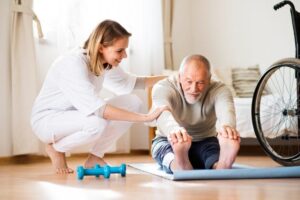
That is why COPD rehabilitation for seniors is about more than simply exercising. A personalized rehabilitation program can help an older adult understand how to move safely, build physical capacity, manage activity levels, and stay involved in the activities that matter to them.
Recent 2026 research is placing increased attention on home-based pulmonary rehabilitation, including traditional home programs, tele-rehabilitation, and hybrid approaches. A 2026 systematic review and network meta-analysis found that several home-based pulmonary rehabilitation models improved exercise capacity and health-related quality of life compared with usual care, with some outcomes broadly comparable to center-based rehabilitation.
For seniors who have difficulty traveling, this growing focus on rehabilitation at home is particularly relevant.
How COPD Can Affect Everyday Movement
COPD can make physical activity more challenging because breathing difficulties may increase during exertion.
An older adult may begin avoiding activities because they are worried about becoming breathless.
At first, this might mean taking fewer walks.
Then they may stop shopping independently.
They may spend more time sitting.
Eventually, reduced activity can contribute to physical deconditioning and weaker muscles.
This can create a difficult cycle:
Breathlessness → less activity → reduced strength and endurance → greater difficulty with activity.
Physical Therapy can be one component of a broader healthcare plan designed to help interrupt this cycle.
What Is Pulmonary Rehabilitation?
Pulmonary rehabilitation is a structured approach that commonly combines exercise training, education, and strategies for managing symptoms and daily activities.
For people with COPD, rehabilitation may focus on improving exercise tolerance and helping them perform everyday activities with greater confidence.
A rehabilitation professional may consider:
- Walking tolerance
- Muscle strength
- Endurance
- Functional mobility
- Activity levels
- Breathing patterns
- Ability to perform daily tasks
- Response to physical activity
The program should be individualized.
A senior with mild COPD who remains active may have very different needs from someone who has recently been hospitalized because of an exacerbation.
Why Strength Matters for Seniors With COPD
COPD is often thought of primarily as a lung condition, but its effects can extend into overall physical function.
When an individual becomes less active, muscles can become weaker and everyday movements may require more effort.
For an older adult, this can make activities such as standing, walking, climbing steps, bathing, or carrying groceries increasingly difficult.
Appropriately prescribed strengthening exercises can help address physical deconditioning.
Depending on the person’s abilities, therapy may incorporate exercises for the:
- Legs
- Hips
- Core
- Arms
- Shoulders
The exercises can be progressed gradually according to tolerance and the individual’s medical needs.
Managing Breathlessness During Activity
One of the biggest concerns for seniors with COPD is becoming short of breath while moving.
A therapist can help an individual learn how to approach activity in a controlled way rather than avoiding movement altogether.
This may involve:
- Breaking activities into smaller steps
- Taking planned rest periods
- Adjusting the pace of movement
- Using appropriate breathing strategies
- Avoiding unnecessary physical effort
- Gradually increasing activity tolerance
The objective is not to force someone through severe breathlessness but instead, the rehabilitation plan should help the person understand how to participate in appropriate activity while following their medical team’s recommendations.
Breathing Techniques May Support Daily Activities
Depending on the individual’s condition and rehabilitation plan, therapists may teach breathing strategies designed to help with activity.
One commonly discussed technique is pursed-lip breathing.
This involves breathing in gently through the nose and breathing out slowly through partially closed lips.
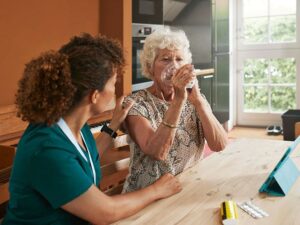
Some people find this useful when experiencing breathlessness during activity, but techniques should be taught and individualized by an appropriate healthcare professional.
Breathing strategies are not a replacement for prescribed COPD medications or medical care.
They are one possible component of a comprehensive approach.
Walking Can Become Part of COPD Rehabilitation
Walking is one of the most practical forms of physical activity for many older adults.
However, someone with COPD may find even short distances challenging.
Instead of focusing on how far a person “should” walk, rehabilitation can begin with a level that is appropriate for their current ability.
For example, therapy may focus on gradually increasing the amount of time someone can remain active before needing a rest.
Over time, improved endurance may make everyday activities easier.
The goal might not be completing a long walk.
It could simply be being able to walk from the bedroom to the kitchen without feeling overwhelmed by the effort.
Rehabilitation Should Connect to Real Life
A senior’s rehabilitation goals should reflect what they actually want to do.
Perhaps they want enough endurance to:
- Cook breakfast
- Walk to the mailbox
- Visit family
- Go grocery shopping
- Attend a religious service
- Walk around their neighborhood
- Play with grandchildren
- Complete personal care independently
These goals give therapy a meaningful purpose.
Rather than measuring progress only through exercise repetitions, rehabilitation can also consider whether the person is becoming more capable of participating in everyday life.
Why Home-Based COPD Rehabilitation Is Receiving More Attention
Travel can be a significant barrier for older adults with COPD.
Getting dressed, arranging transportation, walking through a large facility, and waiting for an appointment can itself require substantial energy.
Home-based rehabilitation removes some of those challenges.
A therapist can work with the senior in the environment where daily activities actually occur.
This approach is receiving increased attention in current rehabilitation research. A 2026 systematic review of pulmonary rehabilitation in older adults with COPD noted that home-based and remote models have become increasingly important for people facing mobility or transportation barriers.
Another 2026 review found that home-based pulmonary rehabilitation models can produce meaningful improvements in exercise capacity and health-related quality of life, although the best approach can vary depending on the patient and the program.
What an In-Home Therapy Session May Focus On
An in-home rehabilitation session can be highly practical.
Instead of exercising only in a clinic, the therapist can observe how the senior handles normal activities.
For example:
Getting dressed: Does the activity cause excessive fatigue?
Walking: How far can the person comfortably move?
Kitchen activities: Can they stand long enough to prepare a meal?
Chair transfers: Can they stand and sit safely?
Household movement: Are certain areas of the home particularly challenging?
These observations can help connect rehabilitation to the person’s actual daily routine.
Occupational Therapy Can Also Help
COPD can affect more than walking and exercise.
It can make daily activities more tiring.
This is where Occupational Therapy for seniors can complement Physical Therapy.
An Occupational Therapist may help a senior modify the way they approach activities so they can conserve energy.
For example, a person may learn to organize frequently used kitchen items within easier reach or divide a demanding household activity into smaller steps.
The objective is to help the senior remain involved in daily life while managing available energy.
Family Members Can Support COPD Rehabilitation
Family caregivers can play an important role.
They can encourage appropriate activity, help maintain a consistent routine, and communicate changes to the rehabilitation team.
However, caregivers should not feel responsible for managing COPD independently.
Changes in breathing, medications, oxygen requirements, or other medical symptoms should be discussed with the patient’s appropriate healthcare professionals.
Family support works best when everyone understands their role.
When COPD Symptoms Need Medical Attention
Physical Therapy should not replace medical management of COPD.
An older adult experiencing a significant change in breathing, severe or rapidly worsening shortness of breath, chest pain, confusion, fainting, bluish lips or fingers, or other concerning symptoms should seek appropriate medical attention.
Likewise, a sudden change from a person’s usual COPD symptoms may require medical evaluation.
Rehabilitation should be coordinated with the individual’s healthcare team, particularly when COPD is moderate to severe or the person has recently experienced an exacerbation or hospitalization.
Personalized COPD Rehabilitation in NYC
At Rehab On Wheels, we understand that every older adult has different abilities, medical circumstances, and goals.
Our Physical and Occupational Therapy services are designed around the individual rather than a standard routine.
For seniors who have difficulty traveling, in-home Physical Therapy in NYC can provide rehabilitation in a familiar environment while reducing some of the physical demands associated with getting to appointments.
Our services are available in Brooklyn and Staten Island, along with in-home rehabilitation throughout New York City.
For a senior living with COPD, the goal may be simple but meaningful: having enough physical capacity to participate in everyday life with greater confidence.
Rehab On Wheels
174 Bay 29th St. Suite #C1
Brooklyn, NY 11214
Phone: 718-395-7445
Fax: 718-889-6707
Office Hours: Monday-Friday, 9 AM-5 PM
Therapy Hours: Monday-Sunday, 8 AM-8 PM
Conclusion
COPD does not have to mean giving up every activity that once mattered.
With appropriate medical management and individualized rehabilitation, older adults can work toward maintaining physical capacity, improving endurance, and finding practical ways to manage activity and breathlessness.
Current research is increasingly exploring how pulmonary rehabilitation can be delivered beyond traditional centers, including through home-based and remote models.
For seniors in New York City, home-based rehabilitation can make therapy more accessible while allowing treatment to focus on the movements and activities that matter most in everyday life.
The goal is not simply to exercise.
It is to help an older adult keep doing as much of life as safely and comfortably as possible.
Author: Catherine Morrissey, PT, DPT