
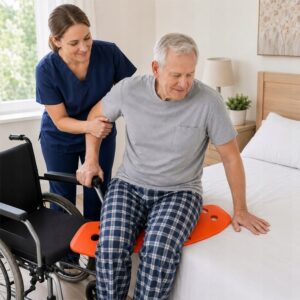
For many families caring for an older loved one, some of the most challenging moments happen during ordinary daily routines.
Getting out of bed in the morning, moving from a wheelchair to a chair, or transferring to the bathroom may seem like simple activities. However, when an older adult experiences weakness, limited mobility, joint pain, or balance difficulties, these movements can become physically demanding.
Family members often step in to help. While this support is valuable, assisting someone with movement without understanding the proper techniques can create safety concerns for both the older adult and the caregiver.
This is where rehabilitation can make an important difference.
Physical and occupational therapy can help patients improve their ability to move between surfaces while teaching families practical strategies for supporting everyday activities.
For NYC families caring for older adults at home, understanding safe patient transfers is an important part of creating a supportive recovery environment.
What Are Patient Transfers?
A patient transfer refers to moving from one position or surface to another.
Common examples include:
- Moving from a bed to a chair.
- Standing up from a seated position.
- Transferring from a wheelchair to a bed.
- Moving from a chair to the toilet.
- Getting into or out of a vehicle.
- Moving between different seating surfaces.
These movements require a combination of muscle strength, balance, coordination, and the ability to follow movement instructions.
When any of these abilities are affected, a transfer may require additional support.
Why Do Transfers Become Difficult for Older Adults?
Several physical and medical factors can make transferring more challenging.
1. Reduced Muscle Strength
Standing up from a chair or moving from a bed requires muscles in the legs, hips, and trunk to work together.
When these muscles become weaker, a person may struggle to lift their body or maintain a stable position.
2. Joint Pain and Stiffness
Conditions such as arthritis can make bending the knees, shifting body weight, or pushing up from a seated position uncomfortable.
This may cause an older adult to move slowly or avoid certain positions.
3. Balance and Coordination Difficulties
A transfer involves changing the body’s center of gravity.
Someone with reduced balance or coordination may feel unsteady when moving from sitting to standing or turning toward another surface.
4. Neurological Conditions
Certain neurological conditions can affect muscle control, movement timing, coordination, and the ability to initiate movement.
In these situations, transferring may require a more structured approach and individualized assistance.
How Physical Therapy Helps Improve Transfer Ability
Physical therapy can address the physical limitations that make transfers difficult.
A therapist may assess how a patient moves from sitting to standing, how much assistance they require, and which movements create the greatest difficulty.
Treatment may include:
Lower-body strengthening: Exercises targeting the muscles used when standing and changing positions.
Sit-to-stand practice: Controlled practice of moving from a seated position to standing, when appropriate.
Balance training: Activities designed to improve stability during position changes.
Functional movement exercises: Practicing movements that reflect the patient’s everyday needs.
The therapist can gradually adjust the difficulty of these activities according to the patient’s progress and safety requirements.
How Occupational Therapy Supports Safer Daily Transfers
Occupational therapy focuses on helping individuals perform everyday activities as independently as possible.
An occupational therapist may assess how a patient moves between different areas of the home and identify practical adjustments.
For example, therapy may involve:
- Reviewing the height and positioning of frequently used chairs.
- Assessing bathroom access and transfer challenges.
- Recommending appropriate grab bars or adaptive equipment.
- Teaching strategies for managing personal care activities.
- Helping patients use their remaining abilities during daily routines.
A patient who struggles to transfer onto a toilet, for example, may benefit from an assessment of bathroom accessibility and recommendations for appropriate equipment.
The aim is to make everyday activities more manageable without placing unnecessary physical demands on the patient.
What Family Caregivers Should Know Before Helping
Caregivers often want to provide immediate assistance when they see a loved one struggling to stand or move.
However, physically lifting someone without proper training can cause injury.
Here are some important considerations:
Never Assume Yesterday’s Technique Is Still Safe
A person’s strength, balance, alertness, and medical condition can change.
If a loved one suddenly requires more assistance than usual, their transfer needs should be reassessed.
Prepare the Environment
Before assisting with a transfer, make sure the area is free from unnecessary obstacles.
Frequently used items should be accessible, and the equipment recommended by the healthcare team should be available.
Follow Professional Instructions
The safest transfer technique depends on the individual’s abilities and medical restrictions.
Some patients may be able to participate actively, while others may require specialized equipment or assistance from trained personnel.
Family members should not attempt to lift someone from the floor after a fall unless they have been specifically trained and it is safe to do so. Seek emergency assistance when there is a suspected injury or the person cannot be safely moved.
Why In-Home Rehabilitation Can Be Particularly Useful
One advantage of in-home rehabilitation is that the therapist can observe the patient performing movements in their actual living environment.
This provides an opportunity to identify challenges that may not be obvious elsewhere.
For example, the therapist may assess:
- How the patient gets out of their own bed.
- Whether their favorite chair is difficult to stand from.
- How they enter and exit the bathroom.
- Whether furniture placement affects movement.
- Which activities require caregiver assistance.
This allows the treatment plan to focus on real-life needs rather than exercises alone.
Rehab On Wheels provides personalized Physical and Occupational Therapy services for patients in Brooklyn, Staten Island, and surrounding NYC communities.
When Should You Consider a Transfer Assessment?
Consider speaking with a healthcare professional if your loved one:
- Needs increasing assistance getting out of bed.
- Struggles to stand from a chair.
- Has experienced a fall during a transfer.
- Feels unsteady when moving between surfaces.
- Requires significant physical assistance from family members.
- Has recently experienced an injury or change in mobility.
A professional assessment can help determine what level of assistance and equipment may be appropriate.
Helping Families Create a Safer Home Environment
Safe transfers are an important part of maintaining independence at home.
With appropriate rehabilitation, patients may work toward improving strength, movement control, and participation in everyday activities. Caregivers can also gain a better understanding of how to support their loved ones without placing unnecessary strain on themselves.
If moving between a bed, chair, or bathroom has become difficult for someone in your family, professional rehabilitation may help identify practical solutions.
Rehab On Wheels offers personalized Physical and Occupational Therapy in NYC, including in-home rehabilitation for patients in Brooklyn and Staten Island.
Clinic Address: 174 Bay 29th St. Suite #C1, Brooklyn, NY 11214
Phone: 718-395-7445
Author: Catherine Morrissey, PT, DPT