
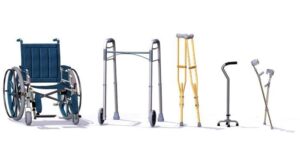
Choosing a walking aid can be a difficult decision, especially when someone has recently started experiencing mobility challenges.
Perhaps you have noticed yourself holding onto furniture while walking around the house. Maybe a family member has become less confident when moving outdoors, or a doctor has suggested considering additional support.
Naturally, questions follow.
Would a cane be enough? Is a walker more appropriate? What exactly is a rollator, and how do you know which option is right?
Walking aids are designed to support mobility, but they are not interchangeable. Choosing the wrong device or using one incorrectly may create additional movement difficulties.
For older adults in NYC, a physical therapy assessment can help identify the type of support that best matches their balance, strength, coordination, and daily activities.
Why Might Someone Need a Walking Aid?
Walking aids can provide additional support for people experiencing physical limitations.
A healthcare professional may recommend one when a patient has:
- Difficulty maintaining balance.
- Weakness affecting one or both legs.
- Joint pain that interferes with walking.
- Reduced walking endurance.
- Difficulty navigating certain environments.
- Mobility limitations following an injury or medical procedure.
Some individuals use walking aids temporarily during recovery, while others may need long-term support.
Needing a mobility device does not mean someone has failed to maintain their independence. In many cases, the right device can make everyday activities more manageable.
Understanding the Different Types of Walking Aids
Each walking aid offers a different level of support.
1. Single-Point Cane
A single-point cane provides a relatively small amount of additional support.
It may be appropriate for someone who needs assistance with mild balance difficulties or has weakness affecting one side of the body.
A cane is generally less supportive than a walker, so it may not be appropriate for someone who requires substantial stability.
2. Quad Cane
A quad cane has a wider base with four contact points.
Compared with a standard single-point cane, it provides a broader support base and may be considered for certain people who need additional stability.
However, it requires appropriate coordination and training to use correctly.
3. Standard Walker
A standard walker provides more support than a cane.
It has four legs and generally requires the user to lift and reposition it while walking.
This option may suit people who need substantial support and have the strength and coordination to manage the device.
4. Wheeled Walker
A two-wheeled walker has wheels on the front legs, allowing the device to move forward without being lifted completely.
It may be useful for individuals who need more support than a cane but find a standard walker difficult to reposition.
5. Rollator
A rollator typically has three or four wheels, hand brakes, and often a built-in seat.
Some people find it useful when they want support during longer outings and need opportunities to sit and rest.
However, a rollator is not suitable for everyone. It requires the ability to control the device, manage the brakes, and maintain appropriate balance while walking.
Cane vs. Walker: Which One Should You Choose?
The right choice depends on the amount and type of support someone needs.
| Mobility aid | General purpose | Important consideration |
|---|---|---|
| Single-point cane | Light support | Requires adequate balance and coordination |
| Quad cane | Additional support through a wider base | May be harder to maneuver |
| Standard walker | Greater stability | Requires lifting and repositioning |
| Wheeled walker | Support with easier forward movement | Requires appropriate steering and control |
| Rollator | Mobility with a seat for resting | Requires reliable brake control |
This is a general comparison, not a recommendation for a particular patient. A physical therapist or other qualified professional should assess the individual’s movement before a device is selected.
Why Proper Walking Aid Fitting Matters
Even the most appropriate walking aid may cause problems if it does not fit correctly.
A device that is too high or too low can affect posture, comfort, and movement.
A physical therapist can help assess:
- Appropriate device height.
- Hand positioning and grip.
- Walking pattern.
- Ability to control the device.
- Turning and changing direction.
- Managing different surfaces.
- Sitting and standing safely when using a rollator.
The therapist can also teach the patient how to use the device during everyday activities.
Common Mistakes People Make With Walking Aids
Some problems occur not because the device is unsuitable, but because it is being used incorrectly.
Common mistakes include:
- Using a cane that provides insufficient support.
- Leaning excessively on a walker.
- Setting the device at an inappropriate height.
- Walking too far ahead of the walker.
- Forgetting to lock rollator brakes before sitting or standing.
- Using damaged equipment.
- Continuing with a device even after mobility needs have changed.
If a walking aid feels uncomfortable or difficult to control, it is worth arranging a professional reassessment.
How Physical Therapy Helps People Use Walking Aids Confidently
Physical therapy can help patients develop the strength, coordination, and movement skills needed to use a walking aid.
A therapist may work on walking patterns, turning, standing, sitting, and navigating familiar environments.
Treatment can also address underlying limitations that affect mobility.
For example, someone who uses a walker because of leg weakness may benefit from a combination of appropriate strengthening and walking practice.
The aim is not simply to teach someone how to use a device. It is to help them move as safely and independently as possible.
When Is It Time to Reassess Your Walking Aid?
A mobility aid that worked well several months ago may no longer meet someone’s needs.
Consider requesting another assessment if you notice:
- More frequent stumbling or near-falls.
- Difficulty controlling the walking aid.
- Increased reliance on furniture or other people.
- New pain while using the device.
- Difficulty navigating familiar spaces.
- Changes in strength, balance, or coordination.
A healthcare professional can determine whether the device needs adjustment or whether another option should be considered.
Conclusion
Choosing a cane, walker, or rollator is not just about purchasing equipment. It is about understanding how much support your body needs and finding a device that fits your lifestyle.
With professional guidance and appropriate physical therapy, older adults can work toward maintaining mobility and participating in daily activities.
Rehab On Wheels offers personalized Physical Therapy services in NYC, including in-home care for patients in Brooklyn, Staten Island, and surrounding communities.
Clinic Address: 174 Bay 29th St. Suite #C1, Brooklyn, NY 11214
Phone: 718-395-7445
Author: Catherine Morrissey, PT, DPT