
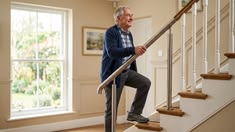
 For many older adults, stairs can gradually become one of the most challenging parts of everyday life.
A staircase that once seemed completely ordinary may suddenly feel intimidating. Getting from one floor to another might require holding tightly to the railing, taking one step at a time, stopping frequently, or asking someone for assistance.
Sometimes the problem begins with knee or hip pain. In other cases, an older adult may notice weakness in one leg, difficulty maintaining balance, or simply feel less confident when stepping up or down.
Because stairs are such a normal part of daily life, it’s easy to overlook these changes. But difficulty navigating stairs can be an important sign that an individual’s strength, balance, coordination, or mobility needs additional attention.
The good news is that struggling with stairs doesn’t necessarily mean an older adult has to stop using them. Physical Therapy for seniors can help identify the underlying challenges and develop a personalized program to make stair navigation safer and more manageable.
At Rehab On Wheels, our experienced Physical and Occupational Therapists work with older adults throughout New York City, providing personalized rehabilitation designed around each patient’s abilities and everyday goals. We also offer clinic-based therapy at our locations in Brooklyn and Staten Island.
For many patients, stair training isn’t simply about going up and down steps. It’s about being able to access different parts of the home, leave the house, visit family, and maintain a sense of independence.
Why Stairs Become More Difficult With Age
Climbing stairs requires considerably more strength and coordination than walking across a level surface.
Each step requires the body to:
- Lift its weight upward
- Stabilize the hips and knees
- Maintain balance
- Coordinate both legs
- Control the body while stepping down
- Adjust to the height and depth of each step
As people age, several factors can make these movements more challenging.
Muscle Weakness
Reduced strength in the thighs, hips, and lower legs can make it difficult to push the body upward.
Joint Pain
Arthritis affecting the knees, hips, or ankles may make weight-bearing movements painful.
Reduced Balance
A person who feels unstable may become nervous about shifting their weight from one leg to another.
Limited Flexibility
Stiffness in the ankles, knees, or hips can interfere with normal stair mechanics.
Previous Injury or Surgery
A hip replacement, knee replacement, fracture, or other injury may temporarily or permanently affect how someone uses stairs.
Neurological Conditions
Conditions that affect coordination, strength, or movement can make stair navigation more difficult.
Why Going Downstairs Can Be Especially Challenging
Many people assume climbing stairs is the hardest part.
For some older adults, however, descending stairs presents an even greater challenge.
Going down requires controlled lowering of the body. The muscles need to work eccentrically to prevent the person from dropping too quickly onto the next step.
Someone with leg weakness may feel as though they are losing control while stepping downward.
They may:
- Hold tightly to the railing
- Turn their body sideways
- Take one step at a time
- Avoid stairs completely
Physical Therapy can address the strength and control needed to improve this movement.
Signs That an Elder May Need Stair Training
Families should pay attention to changes in the way an older adult uses stairs.
Potential warning signs include:
- Holding tightly to the railing
- Taking stairs one step at a time
- Avoiding certain floors of the home
- Pausing frequently between steps
- Experiencing knee or hip pain
- Feeling unsteady
- Struggling to lift one leg onto the next step
- Becoming fatigued after only a few steps
- Asking someone to assist them
- Avoiding leaving the home because of stairs
These changes don’t necessarily mean that a person cannot safely use stairs. They may indicate that targeted rehabilitation could help.
How Physical Therapy Improves Stair Climbing
A Physical Therapist begins by evaluating how the patient moves.
This may include assessing:
- Leg strength
- Balance
- Walking pattern
- Joint mobility
- Flexibility
- Coordination
- Endurance
- Pain
- Ability to transfer weight between legs
Based on the evaluation, the therapist develops a treatment plan that addresses the individual’s specific limitations.
Strengthening the Muscles Used on Stairs
Strong lower-body muscles are essential for stair climbing.
Therapy may incorporate exercises designed to strengthen the:
- Quadriceps
- Hamstrings
- Gluteal muscles
- Calves
- Hip stabilizers
Exercises can be adjusted according to the patient’s current abilities.
Someone who is significantly deconditioned may begin with basic strengthening exercises before progressing to more demanding stair-related activities.
Improving Balance and Weight Shifting
Stair climbing requires the ability to stand securely on one leg while moving the other leg.
Balance training helps patients become more comfortable shifting their weight from one side to another.
A therapist may incorporate:
- Weight-shifting exercises
- Supported single-leg activities
- Step exercises
- Controlled directional movements
- Balance activities designed around the patient’s abilities
Improving balance can make stairs feel less intimidating and improve overall mobility.
Practicing the Actual Stair Movement
One of the most valuable parts of stair training for older adults is practicing the activity itself.
Rather than simply performing exercises in isolation, therapists can work with patients on the actual movements required to use stairs safely.
This may involve practicing:
- Approaching the first step.
- Placing the foot securely.
- Shifting weight appropriately.
- Moving the opposite leg.
- Maintaining a stable posture.
- Controlling the body while descending.
The therapist can provide guidance and gradually increase the challenge as the patient’s abilities improve.
Learning Safe Stair Techniques
The correct technique depends on the individual’s condition, strength, and medical recommendations.
A therapist may teach patients how to:
- Use a handrail appropriately
- Position their feet securely
- Maintain an appropriate pace
- Avoid rushing
- Turn safely at landings
- Use an assistive device when appropriate
For some patients, therapists may recommend specific strategies for managing stairs after surgery, injury, or neurological changes.
The Importance of Proper Footwear
Footwear can influence stability on stairs.
Older adults should generally avoid climbing stairs in loose slippers or footwear that doesn’t provide adequate support.
A Physical Therapist can also discuss practical strategies for improving safety around the home.
How In-Home Physical Therapy Can Make Stair Training More Relevant
One major benefit of in-home Physical Therapy in NYC is that therapy can take place in the environment where the patient actually encounters mobility challenges.
At Rehab On Wheels, therapists can observe the patient’s home setup and identify potential barriers.
For example, they may evaluate:
- Stair height and layout
- Handrail placement
- Lighting
- Clutter
- Flooring
- Landing areas
- Patient footwear
- How the patient approaches the staircase
This allows treatment to focus on real-life mobility rather than exercises alone.
Occupational Therapy and Stair Safety
Occupational Therapy can complement Physical Therapy by addressing how stair difficulties affect everyday routines.
An Occupational Therapist can help seniors find safer ways to manage activities such as:
- Carrying items on stairs
- Getting dressed before using stairs
- Moving household objects
- Organizing frequently used items
- Navigating the home efficiently
The goal is to help patients remain as independent as possible while reducing unnecessary risks.
Don’t Let Fear of Stairs Limit Independence
When stairs become difficult, some seniors begin changing their entire lifestyle around them.
They may stop using an upstairs bedroom.
They might avoid doing laundry.
They may spend more time on one floor of the house.
Some even become reluctant to leave home because they are worried about encountering stairs outside.
Over time, this reduced activity can contribute to further weakness and deconditioning.
Addressing stair difficulties early can help prevent this cycle.
What Families Can Do to Support a Senior
Family members can play an important role in supporting safe mobility.
Instead of simply telling an older adult to “be careful,” encourage them to discuss persistent difficulties with a healthcare or rehabilitation professional.
Families can also help by:
- Keeping stairs free of clutter
- Ensuring stairways are well lit
- Making sure handrails are secure
- Encouraging appropriate footwear
- Avoiding unnecessary rushing
- Following the therapist’s recommendations
Most importantly, avoid assuming that difficulty with stairs is simply something a person must accept because they are getting older.
When Should an Elder Consider Physical Therapy?
Consider a geriatric Physical Therapy evaluation if an older adult has developed new or worsening difficulty with stairs.
Professional rehabilitation may be particularly helpful following:
- Joint replacement
- A fracture
- Hospitalization
- Prolonged inactivity
- An injury
- A neurological diagnosis
- A period of significant weakness
A sudden change in mobility, severe pain, or inability to safely bear weight should be medically evaluated promptly.
Why Rehab On Wheels Is Different
At Rehab On Wheels, we understand that rehabilitation isn’t just about completing exercises. It’s about helping people participate in their real lives.
Founded in 2017 by a team of passionate Physical and Occupational Therapists, Rehab On Wheels was created to make high-quality rehabilitation more accessible to patients who may have difficulty traveling.
Our therapists provide personalized, one-on-one care throughout New York City, helping seniors work toward practical goals that matter to them.
Our services include:
- Personalized Physical Therapy
- Occupational Therapy
- Senior mobility training
- Balance rehabilitation
- Strengthening programs
- Functional mobility training
- Fall prevention strategies
- In-home rehabilitation
For patients who prefer clinic-based care, we also provide rehabilitation at our Brooklyn and Staten Island locations.
Helping Elders Move Through Life With Confidence
Stairs may be part of everyday life, but struggling with them doesn’t have to become a permanent limitation.
With appropriate rehabilitation, older adults can work on the strength, balance, coordination, flexibility, and confidence needed to navigate their environment more safely.
For some people, the goal may be returning to independent stair use. For others, it may be learning safer techniques or determining the most appropriate way to manage stairs given their individual condition.
The important thing is to address the problem rather than simply avoiding movement.
If you or a loved one is having difficulty climbing or descending stairs, Rehab On Wheels can help create a personalized rehabilitation plan based on your needs and daily environment.
Schedule an Appointment With Rehab On Wheels
Our experienced Physical and Occupational Therapists provide personalized in-home rehabilitation throughout New York City, along with clinic-based care in Brooklyn and Staten Island.
Take the first step toward safer mobility, greater confidence, and continued independence.
Clinic Locations:
- Brooklyn, NY
- Staten Island, NY
In-Home Rehabilitation Services: Throughout New York City
Author: Catherine Morrissey, PT, DPT