
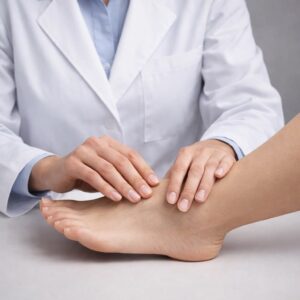
Why Foot Strength Matters as We Age
Every step requires the feet to support and move the body. The muscles in the feet help maintain stability, control movement, and assist with pushing the body forward during walking.
With age, changes in muscle strength, activity levels, joint flexibility, footwear, or previous injuries can affect how well the feet perform these jobs.
A senior may not immediately notice that their feet have become weaker. Instead, they may notice that:
- Walking feels more tiring than it used to
- Their steps have become shorter
- They feel less steady on uneven surfaces
- They avoid certain activities because walking feels uncomfortable
- They have difficulty standing for extended periods
- They shuffle their feet more often
- Getting around the home requires more effort
These changes should not simply be dismissed as a normal part of getting older.
The Connection Between the Feet and Walking
Walking is a coordinated activity involving the feet, ankles, knees, hips, and core. When one part of this system is not working efficiently, other areas may compensate.
For example, limited ankle movement can change the way someone places their foot on the ground. Weakness may make it harder to push off during a step. Reduced control can also make navigating uneven surfaces more challenging.
Physical Therapy looks at the entire movement pattern rather than focusing on one muscle or joint in isolation.
A therapist can evaluate how the feet and ankles function during standing and walking and determine whether weakness, stiffness, pain, or poor movement mechanics may be contributing to mobility difficulties.
Signs That a Senior May Have Foot or Ankle Weakness
Foot and ankle weakness can develop gradually, so family members may notice changes before the older adult recognizes them.
Some signs worth paying attention to include:
1. Difficulty Lifting the Foot
If someone struggles to lift the front of the foot while walking, they may catch their toes on the floor or compensate by lifting the knee higher.
2. Increased Shuffling
A noticeable change from normal steps to shorter, dragging, or shuffling steps can sometimes indicate changes in strength or movement control.
3. Difficulty Walking on Uneven Ground
Grass, sidewalks, ramps, and other uneven surfaces require the ankles and feet to make constant small adjustments.
4. Trouble Rising Onto the Toes
The ability to rise onto the toes depends partly on calf and ankle strength. Difficulty performing this movement may be a sign that lower-leg strength needs attention.
5. Changes in Walking Confidence
Sometimes the first sign is not physical pain but hesitation. A person may begin avoiding longer walks, crowded environments, or outdoor activities because they no longer feel as secure on their feet.
How Physical Therapy Can Help
Physical Therapy for seniors can address foot and ankle strength as part of a broader mobility program.
Treatment is individualized because every person has different needs. A therapist may work on:
- Foot and ankle strengthening
- Calf and lower-leg strength
- Ankle flexibility
- Walking mechanics
- Weight shifting
- Coordination
- Lower-body strength
- Functional movement
- Safe transitions between surfaces
- Appropriate footwear and mobility strategies
The goal is not simply to make a particular muscle stronger. The goal is to help the person use that strength during real-life activities.
For one senior, that might mean walking safely from the bedroom to the kitchen. For another, it could mean being able to walk around the neighborhood, visit family, or participate in community activities.
Why Home-Based Therapy Can Be Especially Helpful
Many seniors have difficulty traveling to a traditional therapy clinic, particularly when walking is already challenging.
In-home Physical Therapy allows treatment to take place in the environment where many mobility challenges actually occur.
A therapist can observe how a person walks through their home, navigates different flooring surfaces, moves between rooms, and performs everyday activities.
This can provide useful information that may not be obvious during a clinic-based evaluation.
For families in New York City, in-home therapy can also eliminate some of the transportation challenges associated with getting an older loved one to appointments.
Footwear Can Make a Difference
Shoes are another important part of senior mobility.
Older adults may continue wearing shoes that are worn out, uncomfortable, too loose, or not appropriate for their daily activities. Poorly fitting footwear can affect comfort and stability.
A Physical Therapist can discuss footwear considerations based on a person’s movement needs. While there is no single shoe that is right for everyone, comfortable and properly fitting footwear can support safer everyday movement.
Small Improvements Can Have a Big Impact
Improving foot and ankle strength does not necessarily require intense workouts.
For some seniors, a carefully designed rehabilitation program may begin with simple movements performed while seated or supported. As strength and confidence improve, exercises can become more functional and challenging.
The important thing is consistency and proper guidance.
A senior who becomes stronger and more comfortable with each step may gradually find everyday activities easier. That can have an impact far beyond walking itself.
Being able to move confidently can make it easier to prepare meals, visit friends, participate in hobbies, move around the home, and remain involved in the community.
When Should You Consider Physical Therapy?
A mobility evaluation may be worthwhile if an older adult has experienced a noticeable change in walking, foot control, endurance, or confidence.
It is especially important to seek professional guidance when mobility changes are persistent, worsening, associated with pain, or interfering with everyday activities.
Physical Therapy can help identify contributing factors and create an individualized plan based on the person’s current abilities and goals.
Supporting Senior Mobility in NYC
At Rehab On Wheels, we understand that mobility is about much more than exercise. It is about helping older adults remain engaged in the lives they want to live.
Our Physical and Occupational Therapy services support seniors throughout New York City, including Brooklyn and Staten Island, with personalized rehabilitation designed around their individual needs.
For seniors who have difficulty traveling, in-home Physical Therapy can bring professional care directly into their living environment. Therapy can focus on practical goals such as walking more comfortably, improving lower-body strength, and making everyday movement feel more manageable.
Rehab On Wheels
174 Bay 29th St. Suite #C1
Brooklyn, NY 11214
Phone: 718-395-7445
Fax: 718-889-6707
Office Hours: Monday-Friday, 9 AM-5 PM
Therapy Hours: Monday-Sunday, 8 AM-8 PM
Conclusion
Strong feet and ankles may not receive as much attention as the hips, knees, or larger leg muscles, but they are essential to everyday movement.
For older adults, maintaining foot and ankle strength can support better walking mechanics, greater confidence, and continued participation in daily activities.
If you or a loved one has noticed changes in walking or lower-body strength, don’t assume that those changes are simply something that comes with age. A Physical Therapy evaluation can help determine what is happening and whether targeted rehabilitation could make daily movement easier.
Sometimes, improving mobility starts with something as simple as strengthening the foundation beneath every step.
Author: Catherine Morrissey, PT, DPT