Leaving the hospital can feel like a major relief for an older adult and their family.
After days or weeks of medical treatment, returning home can feel like getting life back to normal.
But for many seniors, the transition from hospital to home is when another important phase begins.
An older adult may discover that ordinary activities now require considerably more effort.
Getting out of bed may be harder.
Walking to the bathroom may take longer.
Standing in the kitchen may feel exhausting.
A senior who was independent before hospitalization may suddenly need help with activities that once seemed effortless.
This period can be critical for rehabilitation.
Current evidence continues to support rehabilitation and restorative care in home and community settings to help older adults regain function and maintain independence after healthcare transitions.
Why Hospitalization Can Affect Physical Function
Hospital stays are often necessary, but spending significant time in bed or being less active than normal can affect physical conditioning.
An older adult may lose strength and endurance during an illness or hospitalization.
The effect can be particularly noticeable in someone who was already dealing with chronic health conditions or limited mobility.
Once home, the person may find that everyday activities require much more effort than before.
That does not necessarily mean they will remain at that level.
Rehabilitation can provide a structured path toward rebuilding physical function.
The Difference Between Being Medically Stable and Being Fully Independent
A senior may be well enough to leave the hospital but still not be functioning at their previous level.
These are two different things.
Being medically stable means the immediate medical needs have been addressed sufficiently for discharge.
Functional recovery can take considerably longer.
A person may still need to rebuild strength, endurance, coordination, or confidence.
This is why the transition home should not automatically be viewed as the end of recovery.
For many seniors, it is the beginning of the next stage.
Why Early Rehabilitation Can Be Valuable
Rehabilitation can help address functional changes before they become deeply embedded in a person’s routine.
A Physical Therapist may evaluate:
- Walking ability
- Strength
- Endurance
- Transfers
- Functional mobility
- Ability to navigate the home
- Use of assistive devices
- Ability to perform everyday activities
The therapist can then create an individualized plan based on the person’s current condition.
The goal is not to rush recovery.
It is to help the senior make safe, meaningful progress.
Small Goals Can Make a Big Difference
After hospitalization, families sometimes focus on a large goal such as “getting back to normal.”
That goal can feel overwhelming.
Instead, rehabilitation can break recovery into smaller functional goals.
For example:
Week one: Safely move between the bed and bathroom.
Next stage: Stand from a chair with less assistance.
Later: Walk farther around the home.
Eventually: Resume a favorite community activity.
The exact timeline varies from person to person.
What matters is having realistic goals that connect rehabilitation to everyday life.
In-Home Physical Therapy Can Make the Transition Easier
For some older adults, traveling to a therapy clinic immediately after hospitalization can be difficult.
They may be weak.
They may have limited endurance.
They may depend on a caregiver for transportation.
They may simply find leaving home physically exhausting.
In-home Physical Therapy in NYC can provide another option.
A therapist can work with the senior in the environment where recovery is actually happening.
This can make therapy highly practical.
Instead of only practicing movement in a clinic, rehabilitation can address the specific challenges the senior encounters at home.
What Can Be Practiced at Home?
Depending on the individual’s condition and medical recommendations, therapy may address:
- Getting in and out of bed
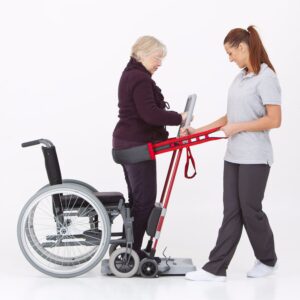
- Standing from a chair
- Walking between rooms
- Navigating the home
- Improving lower-body strength
- Building endurance
- Improving functional mobility
- Using an assistive device appropriately
- Completing everyday movements more safely
The specific program should always be individualized.
There is no universal recovery exercise plan for every senior after hospitalization.
Occupational Therapy Can Help With Everyday Activities
Physical recovery is only one part of returning home.
An older adult may also struggle with dressing, bathing, meal preparation, grooming, medication routines, or household activities.
Occupational Therapy can address these practical challenges.
An Occupational Therapist can look at how a senior performs everyday tasks and identify strategies that may help them participate more safely and independently.
This can be particularly valuable when hospitalization has changed what the person can comfortably do.
The Home Environment Becomes Part of Rehabilitation
One advantage of home-based rehabilitation is that the therapist can see the actual environment.
A senior may have difficulty moving around a particular piece of furniture.
The bathroom may present a challenge.
Frequently used items may be stored in difficult-to-reach places.
A particular transition between rooms may require more physical effort than expected.
These details may not become apparent during a traditional clinic appointment.
Addressing the real environment can help make rehabilitation more functional.
Family Members Have an Important Role
Family members often become more involved after a senior returns home.
They may help with meals, transportation, household responsibilities, medications, or personal care.
Communication with the rehabilitation team can help families understand how much assistance is appropriate.
The objective should be to provide the support the senior needs while allowing them to participate in safe activities they can still perform independently.
Doing everything for a recovering senior is not always the best approach.
When appropriate, participation can help rebuild confidence and functional ability.
Watch for Changes After Returning Home
Families should pay attention to significant changes after discharge.
These may include:
- Increasing difficulty walking
- New or worsening weakness
- Increasing dependence on others
- Difficulty completing basic activities
- Unusual fatigue
- Reduced appetite or fluid intake
- Confusion or significant changes in alertness
- New pain or other concerning symptoms
Some symptoms require medical attention rather than rehabilitation alone.
If a senior develops sudden weakness, chest pain, severe breathing difficulty, fainting, confusion, or other emergency symptoms, immediate medical evaluation is appropriate.
Rehabilitation Is About Returning to Life, Not Just Exercise
It is easy to think about Physical Therapy as a series of exercises.
But for a senior recovering from hospitalization, the larger goal is often much more personal.
It may be returning to the kitchen.
Being able to shower with greater independence.
Walking to the mailbox.
Sitting at the dining table with family.
Going back to a favorite activity.
These everyday goals give rehabilitation meaning.
Post-Hospital Rehabilitation in Brooklyn and Staten Island
At Rehab On Wheels, we provide personalized Physical and Occupational Therapy designed around the individual’s needs and functional goals.
For older adults recovering after hospitalization, our therapists can work with patients in their homes, helping them address the real-world movement challenges they face during recovery.
We provide rehabilitation services in Brooklyn and Staten Island, as well as in-home therapy throughout New York City.
Our goal is to help seniors work toward greater strength, function, confidence, and independence while respecting the pace of their recovery.
In Conclusion,
Going home after hospitalization is an important milestone, but it does not necessarily mean an older adult has returned to their previous level of physical function.
The weeks that follow can be an important opportunity to rebuild strength, endurance, mobility, and confidence.
With individualized post-hospital rehabilitation, seniors can work toward practical goals that matter in everyday life.
For older adults in New York City, Brooklyn, and Staten Island, in-home Physical and Occupational Therapy can bring rehabilitation directly into the environment where recovery is taking place.
Recovery does not have to be measured only by how quickly someone gets back to their old routine but simply being able to do a little more today than yesterday.
Rehab On Wheels
174 Bay 29th St. Suite #C1
Brooklyn, NY 11214
Phone: 718-395-7445
Fax: 718-889-6707
Office Hours: Monday-Friday, 9 AM-5 PM
Therapy Hours: Monday-Sunday, 8 AM-8 PM
Author: Catherine Morrissey, PT, DPT