Imagine noticing that your handwriting has become smaller than it used to be. Perhaps one arm doesn’t swing naturally while you’re walking, or getting up from your favorite chair suddenly takes more effort than before. These changes may seem minor at first, and it’s easy to dismiss them as simply “getting older.”
However, in some cases, these subtle changes can be among the earliest signs of Parkinson’s disease.
Parkinson’s disease is a progressive neurological condition that affects movement, balance, coordination, and muscle control. While there is currently no cure, recognizing the condition early can make a significant difference in managing symptoms, maintaining independence, and improving long-term quality of life.
Early diagnosis allows individuals to begin treatment sooner, including medications, lifestyle modifications, and rehabilitation therapies that can help preserve mobility and daily function.
What Is Parkinson’s Disease?
Parkinson’s disease is a neurological disorder that develops when nerve cells in a specific area of the brain gradually become damaged or die.
These nerve cells produce dopamine, a chemical messenger responsible for coordinating smooth, controlled movement. As dopamine levels decrease, movement becomes slower and more difficult, leading to the symptoms commonly associated with Parkinson’s disease.
Although Parkinson’s is more common in adults over the age of 60, it can occasionally develop earlier.
The condition progresses differently for every individual, which is why early recognition and personalized treatment are so important.
Early Signs of Parkinson’s Disease
The symptoms often develop gradually over months or even years. Many people experience subtle changes long before receiving a diagnosis.
1. Tremors
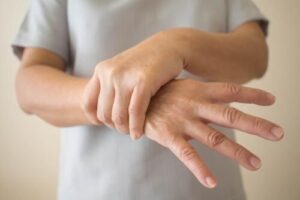
One of the most recognized signs of Parkinson’s disease is a resting tremor.
It often begins in:
- One hand
- Fingers
- Thumb
- Arm
The shaking usually occurs when the body is relaxed and may lessen during movement.
Not everyone with Parkinson’s experiences tremors, so their absence does not rule out the condition.
2. Slowed Movement (Bradykinesia)
Bradykinesia refers to a gradual slowing of movement.
You may notice:
- Taking longer to complete daily tasks
- Walking more slowly
- Difficulty initiating movement
- Reduced facial expressions
- Trouble standing up from a chair
These changes often develop gradually and may be mistaken for normal aging.
3. Muscle Stiffness
Stiff muscles can occur in the arms, legs, shoulders, or neck.
Symptoms may include:
- Tight muscles
- Limited range of motion
- Difficulty turning in bed
- Pain or discomfort during movement
Persistent stiffness can interfere with walking and everyday activities.
4. Changes in Walking
Parkinson’s disease often affects gait.
Common walking changes include:
- Shorter steps
- Shuffling gait
- Reduced arm swing
- Difficulty turning
- Feeling as though your feet are “stuck” to the floor (known as freezing)
These changes can increase the risk of falls if left untreated.
5. Balance Problems
As Parkinson’s progresses, maintaining balance may become more difficult.
You might notice:
- Feeling unsteady
- Difficulty changing directions
- Trouble recovering after stumbling
- Increased fear of falling
Balance issues are one of the reasons rehabilitation is so important for people living with Parkinson’s disease.
6. Smaller Handwriting
Many people with Parkinson’s notice that their handwriting becomes noticeably smaller over time.
This symptom, known as micrographia, is often one of the earliest warning signs.
7. Softer Voice
Family members sometimes notice changes before the individual does.
A person with Parkinson’s may begin speaking:
- More quietly
- Monotonously
- Less clearly
Speech therapy may become part of a comprehensive rehabilitation plan if communication is affected.
8. Reduced Facial Expressions
Parkinson’s can reduce automatic facial movements, sometimes creating a serious or expressionless appearance.
This is commonly referred to as “masked face.”
Although facial expression changes do not reflect a person’s emotions, they can affect communication and social interactions.
9. Difficulty with Fine Motor Skills
Everyday activities requiring hand coordination may become more challenging.
These include:
- Buttoning clothing
- Writing
- Using utensils
- Opening containers
- Handling small objects
Occupational Therapy can provide strategies and exercises to improve hand function and independence.
When Should You See a Doctor?
Experiencing one of these symptoms does not necessarily mean you have Parkinson’s disease.
Many conditions can cause similar symptoms.
However, if you notice several of these changes—particularly if they are persistent or worsening—it is important to consult your healthcare provider.
Early evaluation can help identify the cause and ensure appropriate treatment begins as soon as possible.
How Physical Therapy Helps People with Parkinson’s Disease
Physical Therapy is an important part of managing Parkinson’s disease.
While it cannot stop disease progression, it can help patients maintain mobility, improve safety, and continue participating in everyday activities.
Therapy often focuses on:
Improving Balance
Balance exercises reduce fall risk and improve stability during movement.
Strength Training
Maintaining muscle strength supports better posture, walking, and overall mobility.
Gait Training
Therapists teach techniques that improve walking speed, stride length, and confidence.
Flexibility Exercises
Stretching reduces stiffness and improves joint mobility.
Functional Movement Training
Patients practice everyday activities such as:
- Standing from a chair
- Climbing stairs
- Turning safely
- Walking through the home
How Occupational Therapy Supports Daily Independence
Occupational Therapy helps people continue performing everyday tasks despite physical changes.
Occupational therapists assist with:
- Dressing
- Bathing
- Meal preparation
- Hand coordination
- Home safety recommendations
- Adaptive equipment training
- Energy conservation techniques
These practical strategies help patients remain independent longer.
The Benefits of In-Home Rehabilitation
Many individuals with Parkinson’s disease find traveling increasingly challenging.
Receiving therapy at home offers several advantages.
At Rehab On Wheels, our therapists provide personalized in-home rehabilitation throughout New York City.
Benefits include:
- One-on-one personalized care
- Treatment in familiar surroundings
- Home safety assessments
- Real-life mobility training
- Greater convenience
- Improved treatment consistency
Practicing movement in the home allows therapists to address the specific challenges patients encounter every day.
Supporting Family Caregivers
Parkinson’s disease affects the entire family.
Caregivers often assist with mobility, household tasks, and daily routines.
Our therapists work closely with family members by providing education on:
- Safe mobility techniques
- Fall prevention
- Home modifications
- Exercise programs
- Strategies to encourage independence
Supporting caregivers helps create a safer and more confident recovery environment.
Why Families Choose Rehab On Wheels
Founded in 2017 by a team of passionate Physical and Occupational Therapists, Rehab On Wheels is dedicated to making rehabilitation services more accessible to seniors throughout New York City.
We proudly provide personalized in-home rehabilitation services across NYC, along with clinic-based care in Brooklyn and Staten Island.
Families trust Rehab On Wheels because we provide:
- Personalized one-on-one therapy
- Experienced Physical and Occupational Therapists
- Parkinson’s disease rehabilitation
- Convenient in-home therapy
- Compassionate senior-focused care
- Individualized treatment plans
Our mission is to help older adults maintain mobility, preserve independence, and enjoy the highest possible quality of life.
Conclusion
Parkinson’s disease often begins with small, subtle changes that are easy to overlook. Recognizing those early signs and seeking medical advice promptly can lead to earlier treatment and better long-term outcomes.
Combined with personalized Physical and Occupational Therapy, early intervention can help improve mobility, reduce fall risks, and support independence for years to come.
If you or a loved one has noticed changes in movement, balance, or coordination, don’t ignore them. The right support at the right time can make a significant difference.
At Rehab On Wheels, we’re proud to help seniors throughout New York City, Brooklyn, and Staten Island live confidently with personalized rehabilitation designed around their individual goals.
Author: Catherine Morrissey, PT, DPT