
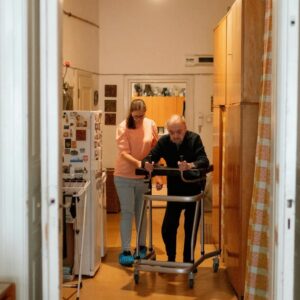
A home that has been comfortable for decades may become harder to manage as a person’s physical abilities change. A frequently used kitchen shelf may become difficult to reach. A bathroom routine may require more effort. Carrying laundry, getting dressed, or moving between rooms may take longer than it once did.
These changes do not automatically mean an older adult must move or give up familiar routines. Sometimes, the way a task is performed or the way a living space is arranged can make a meaningful difference.
A rehabilitation home assessment looks at the relationship between a person’s abilities and their everyday environment. Rather than focusing only on a diagnosis, it considers how the individual moves, completes daily tasks, and interacts with the home.
For older adults in Brooklyn, Staten Island, and across New York City, home assessment and rehabilitation services may help identify practical changes that support comfort, function, and independence.
What Is a Rehabilitation Home Assessment?
A home assessment considers how a person’s living environment supports or complicates everyday activities. Depending on the patient’s needs and the service provided, the assessment may examine movement through the home, access to frequently used items, bathroom routines, seating arrangements, and the physical demands of common tasks.
The purpose is to identify barriers and discuss reasonable strategies to address them.
A rehabilitation professional may consider questions such as:
- Can the person reach frequently used items without unnecessary strain?
- Are commonly used pathways easy to navigate?
- Is getting on and off a chair manageable?
- Does the person need a different approach to bathing or dressing?
- Would adaptive equipment or a change in task setup help?
- Are there activities that have become difficult because of pain, weakness, limited coordination, or reduced endurance?
The assessment should reflect the person’s abilities, preferences, home layout, and priorities. A solution that works well for one person may not be appropriate for another.
How Occupational Therapy Can Help With Everyday Tasks
Occupational Therapy focuses on helping people perform meaningful daily activities as effectively as possible.
When an older adult struggles with a household routine, the answer is not always to stop doing the task. An Occupational Therapist may help the person explore a different way to complete it, adjust the environment, or use an appropriate adaptive device.
Making Personal Care Easier
Bathing, dressing, and grooming involve a combination of movement, coordination, balance, and planning. If one part of the routine becomes difficult, the entire activity can feel overwhelming.
Occupational Therapy may address task sequencing, positioning, equipment options, and ways to reduce unnecessary physical demands. Any equipment recommendation should be based on the individual’s needs and appropriate professional guidance.
Improving Kitchen and Household Routines
Preparing a simple meal can involve reaching, gripping, standing, carrying, and managing several objects at once.
A therapist may help identify ways to arrange frequently used items, simplify steps, or modify a routine so that the person can participate more comfortably. The goal is to support function while respecting the individual’s preferences and independence.
Supporting Hand Function
Hand discomfort, weakness, or reduced coordination can make opening containers, handling utensils, fastening clothing, or using household objects more challenging.
Rehab On Wheels lists Hand Therapy among its available services. Depending on the patient’s condition and clinical needs, hand-focused rehabilitation may help address functional limitations affecting everyday tasks.
How Physical Therapy Fits Into Home-Based Rehabilitation
Occupational Therapy is only one part of the picture. Physical Therapy may be helpful when the main barriers involve strength, mobility, flexibility, coordination, or functional movement.
For example, a person may struggle to stand from a low chair or move comfortably between different areas of the home. A Physical Therapist can evaluate relevant movement limitations and develop an individualized plan to improve physical function.
Depending on the evaluation, treatment may include:
- Strengthening exercises.
- Functional movement practice.
- Mobility training.
- Exercises adapted to pain or physical limitations.
- Strategies for performing necessary movements more comfortably.
Physical Therapy and Occupational Therapy can complement each other when a patient needs support with both physical abilities and the practical demands of everyday life.
When Manual Therapy or Telehealth May Be Appropriate
Some people experience pain or stiffness that makes routine activities harder. Manual Therapy may be considered as part of an appropriate treatment plan when clinically indicated. It should be selected by a qualified professional after considering the patient’s condition and goals, and it may be combined with exercise or functional training.
Telehealth can offer another way to access certain rehabilitation services. Depending on the service and the individual’s needs, a remote session may allow a therapist to discuss progress, review selected exercises, provide guidance, or help the patient work toward agreed goals.
Telehealth cannot replace every in-person assessment. A hands-on examination or direct home evaluation may be needed for some concerns. Families should confirm whether a particular service is available remotely and whether it is appropriate for the patient’s situation.
Small Changes Can Support Greater Participation
Home adaptations do not need to be complicated to be useful. In some situations, adjusting where items are stored, changing how a task is organized, or selecting appropriate equipment can reduce unnecessary effort.
However, families should avoid making major changes based on assumptions alone. For example, installing or moving equipment without considering the person’s strength, balance, mobility, and specific needs may create new problems.
A professional assessment can help distinguish between changes that are practical and those that require additional evaluation.
It is also important to involve the older adult in the process. The purpose is not to take control of their home or daily routine. It is to help them remain involved in the activities that matter to them.
Who May Benefit From a Home Assessment?
A rehabilitation home assessment may be worth discussing with a healthcare professional when an older adult:
- Has difficulty completing familiar household activities.
- Experiences changes in movement or hand function.
- Finds personal care routines increasingly challenging.
- Has returned home after an illness, injury, or procedure.
- Needs help identifying practical environmental adaptations.
- Wants to continue living at home while managing changing physical abilities.
A home assessment does not guarantee that every risk can be eliminated. Its value lies in identifying relevant barriers and helping the individual and family consider appropriate next steps.
Home Assessment and Rehabilitation in NYC
Rehab On Wheels offers a home assessment service, alongside Physical Therapy, Occupational Therapy, Hand Therapy, and other rehabilitation options. These services can help patients explore support for movement, daily tasks, and functional challenges.
The clinic serves patients throughout New York City through in-home care and has clinic locations in Brooklyn and Staten Island. Families can contact the team to discuss the services available and determine which type of evaluation may fit their needs.
Conclusion
Maintaining independence at home often involves more than physical strength. It can also depend on how daily tasks are organized, whether frequently used items are accessible, and whether the home environment matches a person’s current abilities.
A rehabilitation home assessment can help older adults and their families identify practical ways to make everyday routines more manageable. With appropriate Occupational Therapy, Physical Therapy, Hand Therapy, or other recommended support, patients may be better equipped to participate in the activities that matter to them.
If you or a loved one is finding everyday tasks more difficult, contact Rehab On Wheels to ask about home assessments and rehabilitation services in Brooklyn, Staten Island, and across NYC.
Rehab On Wheels
174 Bay 29th St., Suite #C1, Brooklyn, NY 11214
Phone: 718-395-7445
Author: Catherine Morrissey, PT, DPT